EU Digital Product Passports
Everything you need for digital product passports.
Create, validate and publish EU-compliant passports from the product data you already have. Brand native on autopilot, checked against the EU standards every time it changes.
DPP Agent in two minutes.
Examples
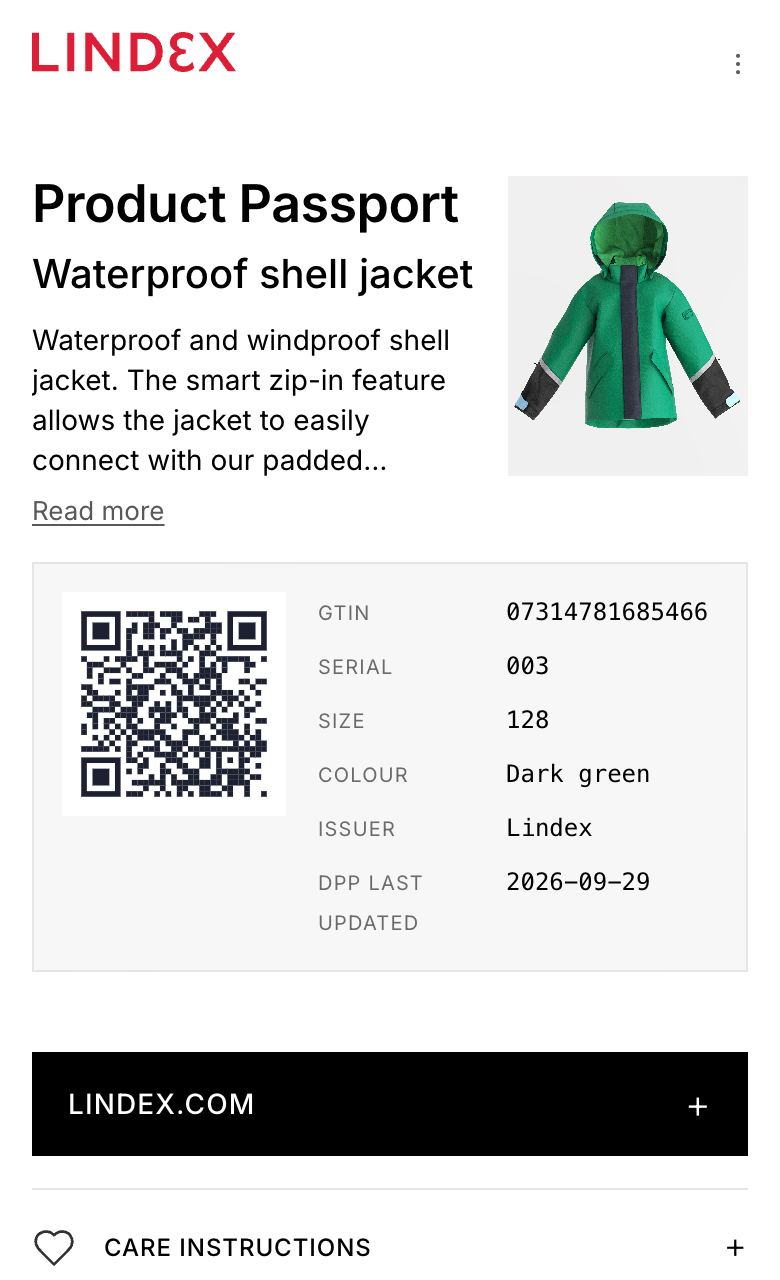
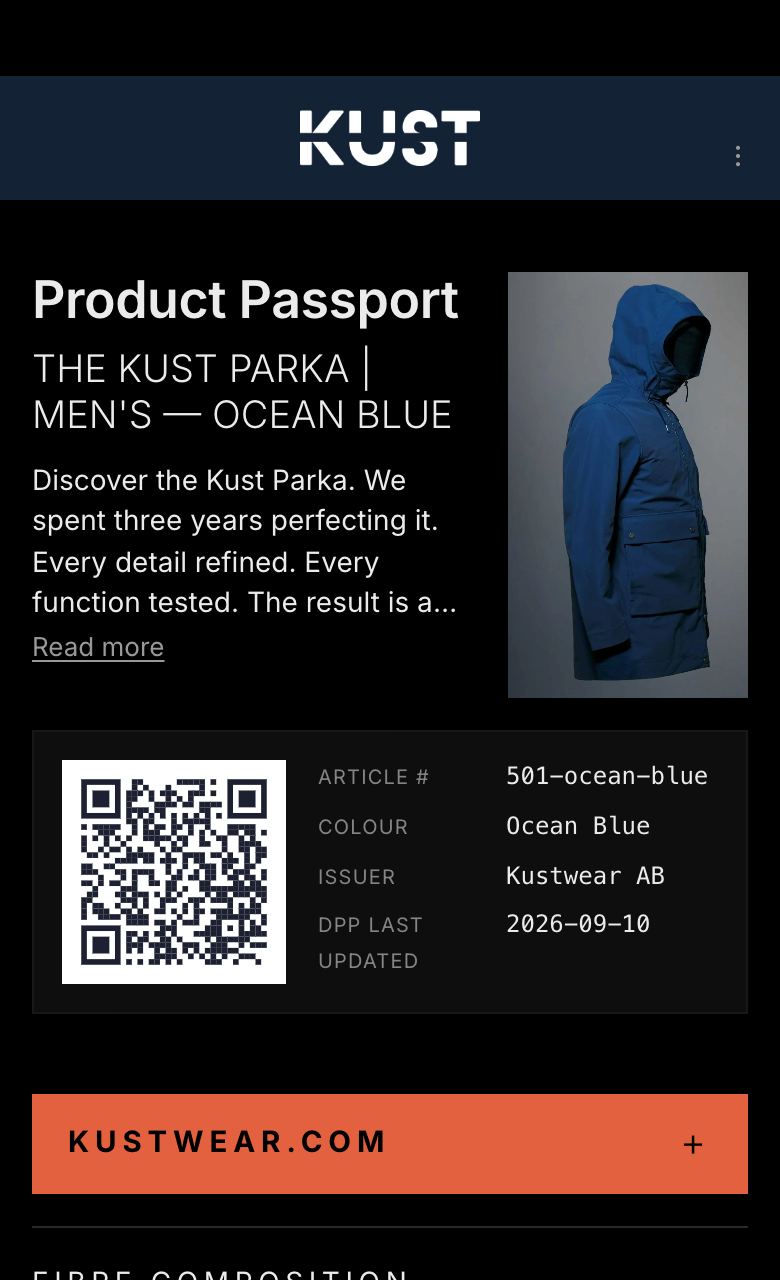
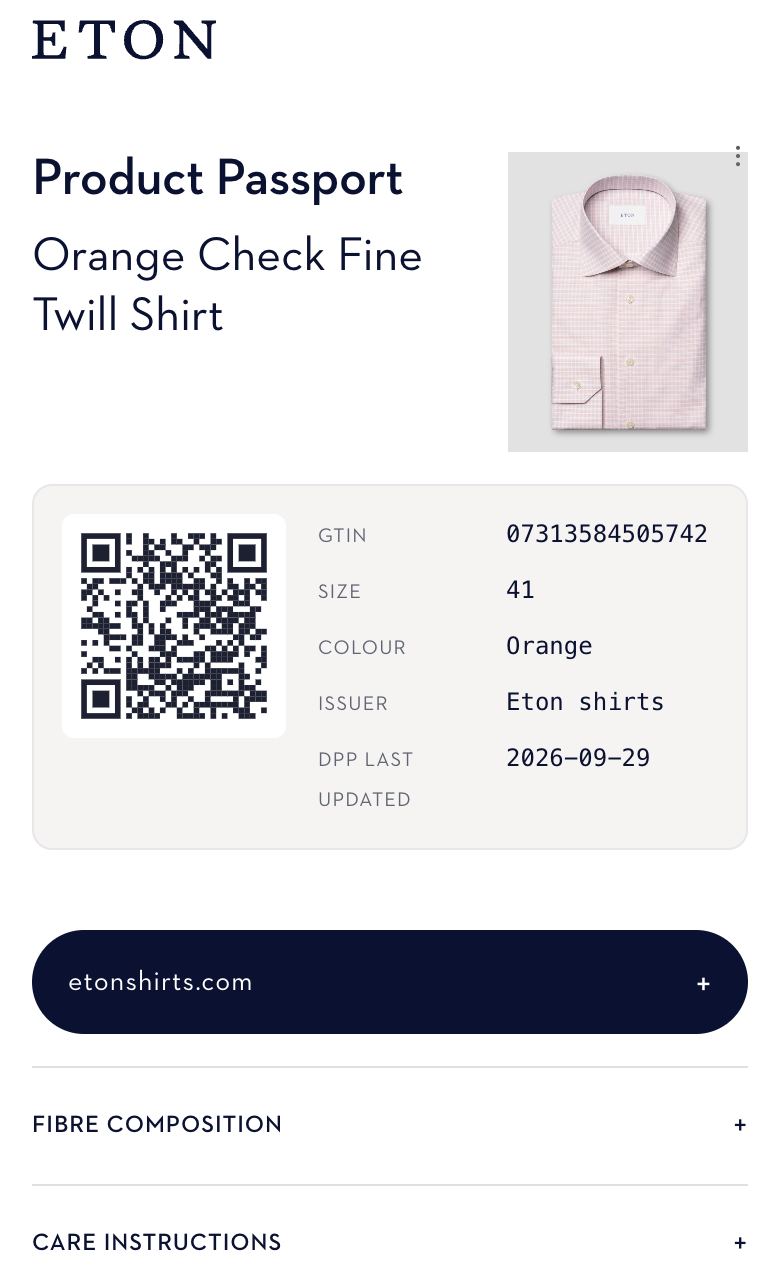
Real passports, real data, brand native on autopilot.
How it works
From the data you have to a passport on your own domain.
Connect
Your PIM or shop: Akeneo, inriver, Centra, Shopify, Magento, WooCommerce, commercetools or Delogue. Traceability from TrusTrace and TextileGenesis, energy labels from EPREL, or an Excel file, CSV, Google Sheet or our API. Every gap is flagged, every suggestion shows its source, and a person approves.
Check
Every passport is graded against ESPR and the EU passport standards before it goes live, and again every time it changes.
Publish
A GS1 Digital Link and QR code per product, batch or item, on your own domain, in the look of your own product page. Every version is kept.
Want to see what it takes for your own products? Book half an hour, or call us now.
Start here
Three ways in.
Create a passport
Paste your web address or connect your catalogue. Your first passport in minutes.
Validate any passport
Yours, a supplier's or a competitor's. A grade and a list of what is missing, free and without signing in.
See how it looks
The compliance page every passport gets, and the custom experience some products are worth.
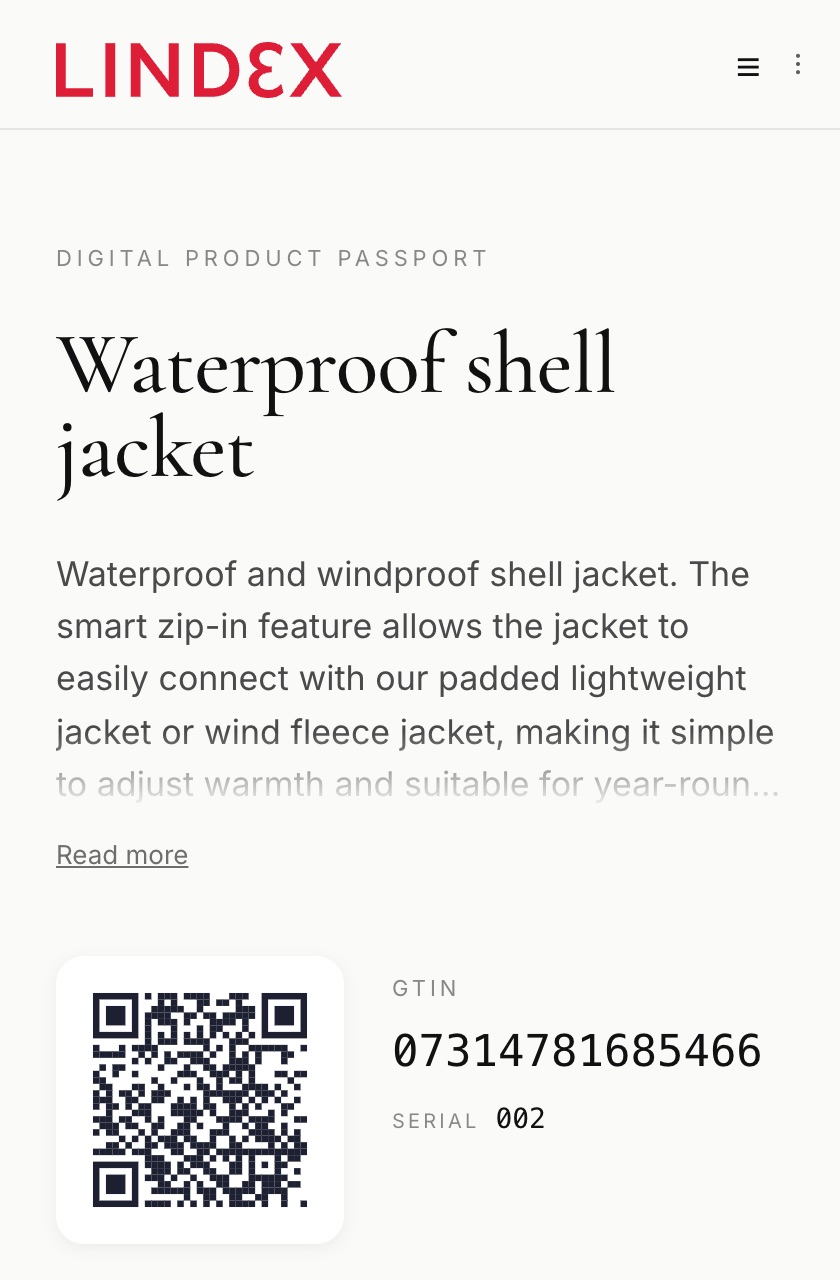
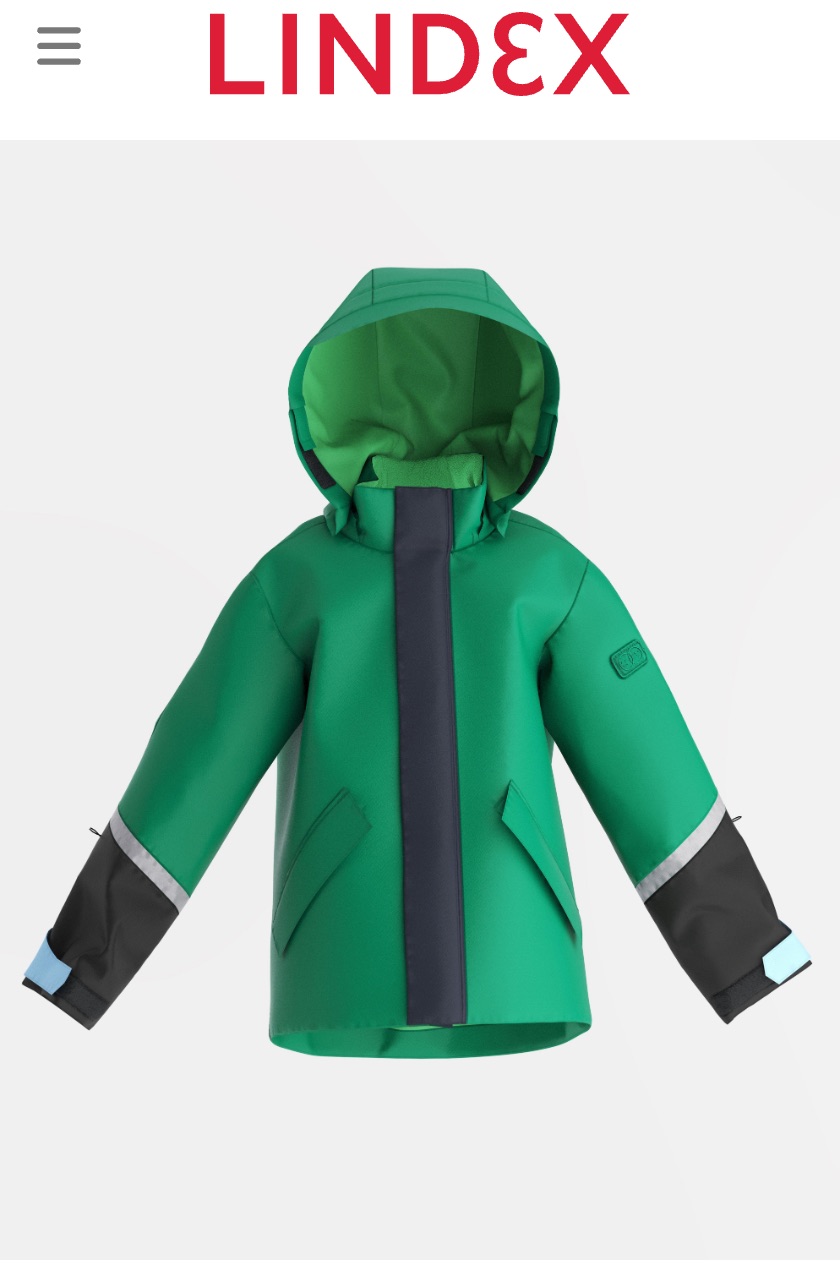
Standards
The standards we cover.
The DPP space isn't one regulation; it's a stack. Here's what DPP Agent implements natively.
ESPR (EU 2024/1781)
The Ecodesign for Sustainable Products Regulation is the parent framework. Article 4 lets the Commission set requirements per product group by delegated act, Article 7 covers information requirements, and Article 9 the digital product passport, whose data is drawn from Annex III. DPP Agent carries the Annex III passport data, with category schemas for textiles and footwear, electronics, tyres, furniture, mattresses, construction products, iron and steel, and aluminium. Delegated Acts land per product group on a rolling schedule — we track them.
AGEC (French Loi anti-gaspillage)
France's anti-waste law sets national textile disposal and EPR rules alongside ESPR: the Triman logo, the Info-tri sorting instruction, and the EPR unique identifier (IDU). Every French-facing textile DPP validates against the AGEC overlay. Also covered: the Article 13 product information sheet, the EPR scheme, and disposal instructions.
CIRPASS-2 core data model
The cross-sector data model from CIRPASS-2, the passport project the EU funds under the Digital Europe Programme to make passports readable across systems. DPP Agent emits CIRPASS-2 JSON per DPP through the resolver (?schema=cirpass-2) so downstream tools that read that model ingest without custom mapping.
EU Batteries Regulation (2023/1542)
Batteries are first in line for mandatory DPPs (from 18 February 2027 for LMT batteries, industrial batteries over 2 kWh and EV batteries). DPP Agent implements chemistry, capacity, state-of-health, dismantling information, critical-raw-material declarations, and collection and end-of-life information per Annex XIII of the Battery Regulation.
GS1 Digital Link (ISO/IEC 18975)
Every DPP is reachable via a GS1 Digital Link URI compatible with the ISO QR standard (ISO/IEC 18004). GTIN, batch (AI 10), serial (AI 21) and CPV (AI 22) are supported so a single QR resolves to the right passport at the right granularity.
The eight CEN passport standards (JTC 24)
Written under the Commission's request M/604 to support ESPR. Six are harmonised, cited in the Official Journal in July 2026. Two more, on access and authenticity, are finished but not cited yet.
EN 18216
HarmonisedHow a passport travels between systems. Every passport answers on one address with a page for people and JSON for machines, chosen by the Accept header of the request.
EN 18219
HarmonisedWhich identifier a passport may carry and how it is written. We address passports by GS1 Digital Link (/01/ followed by the GTIN) where a valid GTIN exists, otherwise by an identification link, and publish a GS1 linkset so the links can be discovered.
EN 18220
HarmonisedThe QR code or tag on the product and what it must lead to. Our codes resolve to the passport itself, and the validator fails any carrier whose address answers with an error.
EN 18221
HarmonisedHow long a passport must stay available, and what happens if the publisher goes away. Every version is archived, and when a backup host is set the passport points to it, so it can outlive a change of vendor.
EN 18222
HarmonisedThe Life Cycle API for reading passports from software. We serve the three mandatory read methods: by passport ID, by product ID, and in bulk by product IDs.
EN 18223
HarmonisedThe shared data model, so any system can read any passport. Every passport carries the header the standard requires: identifier, granularity, schema version, last update and economic operator.
EN 18239
Not cited yetWho may see which part of a passport: the public, authorities, repairers, recyclers. The text was finalised in September 2026 and is not cited in the Official Journal yet, so no one can claim conformity with it today.
EN 18246
Not cited yetProof that a passport comes from the named operator and has not been altered. Not cited yet. The validator already checks the three requirements visible from outside: public data needs no login, any device can read it, and readers are not tracked.
Certificates from GOTS, OEKO-TEX and Svanen (Nordic Swan Ecolabel) are verified automatically against the issuer's own register, and checked again every week.
DPP Academy
Learn DPP in two minutes at a time.
Short films on what the EU asks for, how the standards work and what the work looks like in practice. Every claim shows its source on screen. Free, in 14 languages.


Questions
Frequently asked.
Answers to what prospects ask before they sign up.
What is a Digital Product Passport?
Which product categories does DPP Agent support?
Do I need Akeneo or a PIM to use DPP Agent?
How long does it take to publish a passport?
Where is my data stored?
Can I put a passport on my own domain?
What happens if I switch away from DPP Agent later?
Is there a free trial?
Get started
Start with one product.
The battery passport applies from February 2027, and textiles, tyres, furniture and other product groups follow under ESPR as their delegated acts are adopted. Getting a catalogue ready takes months, so the first passport is the place to start.